We’ve all been there… out for a peaceful fun walk with your dog, minding your business, when all of a sudden you are faced with a random dog approaching you. When a strange dog is approaching, especially at pace, it is difficult to figure out if they are friendly or not and whether there is any cause for alarm. It is even more difficult when an owner is not present or so far away they can’t see what’s going on.
Understanding Perspectives
Now, for social doggies and confident owners this situation might not be a huge issue. If you LOVE dogs then you might jump for joy if you see one hurtling towards you at top speed. But for many others, this can be a truly terrifying experience. There are lots of reasons for this:
- Some people (and/or their dogs) have had scary experiences with dogs in the past. This makes them super nervous about approaching dogs.
- Their own dog’s lack of social skills is causing them stress. Their dog is either going to be terrified or a reactive mess as soon as it clocks the oncoming dog.
- If there is a huge size difference between the dogs it means added risk for the smaller dog if things go wrong.
- Maybe they just don’t want to be bothered by dogs that approach them in public uninvited!
During the consultation process at the recent review of the Tasman District Council dog control policy, unwanted “dog intrusions” was a common complaint raised by many members of the public. I also see a reasonable amount of complaining by dog owners on local social media groups about unwanted attention from dogs they meet. The dog population is growing, and unfortunately we still have a bit to learn about dog etiquette in public spaces.
Hopefully the majority of us can agree that our dogs simply should not be allowed to be a nuisance to others and that better control of our dogs is the solution. However the reality is that a small few will continue to exercise poor control of their dog even if they know better.
So, it is worth giving some thought to how you would deal with off lead dogs that ambush you in public, especially when out for a walk with your own dog.
Important considerations
The following are important factors to consider when deciding the best course of action:
- The attitude of the approaching dog.
- Friendly: If the approaching dog seems friendly, probably the best strategy is just to try and go with it. I appreciate this can be a big experience for many people but staying present and positive will really help your dog stay confident. Try to keep the interaction as short as possible. Gradually move away or towards the dog’s owner so they can help you get things under control if need be. See tips below for helping dog meet and greets go well.
- Scared: If the oncoming dog appears scared, then try to stay gentle and relaxed in your approach to avoid spooking the dog. See tips below for helping dog meet and greets go well.
- Aggressive: If the approaching dog means business or indeed you expect your own dog to be aggressive, then clearly you will need to try to avoid the interaction. See strategies further below for avoiding oncoming dogs.
- The attitude of the other dog owner.
If the owner of the other dog is in sight, try to get their attention and communicate calmly and politely. Ask them nicely to call their dog. Remain calm but be assertive about what you want them to do (i.e. “please call your dog, he is much bigger than mine and I’m nervous about that.”). Most people will do their absolute best to get their dog under control. Always be patient and grateful to someone who is listening to you and trying to catch their dog!
Unfortunately some dog owners will have different opinions about dog control so you also need to be prepared to meet some resistance. Some people will still think it’s OK to let their dog run at you and yell “my dog is friendly!” Don’t be drawn into an argument. There are idiots everywhere!! Stay calm, if only for your dog’s sake. Try to communicate as best you can and if it is not received well, start to create distance by moving you and your dog off in another direction.
The size difference between the dogs
The bigger the size difference, the bigger the risk. Little dogs have tiny little frames and are incredibly vulnerable. Some bigger dogs don’t know their own strength and some bigger dogs can even confuse little dogs with prey animals. A big dog can scare the daylights out of a little dog by rushing up and just towering over them.
It’s incredibly important as dog owners that we respect the size difference that exists between our dogs. And that works both ways! It should be a very important factor in deciding whether or not to let your dog approach another dog i.e are they size-appropriate? If there is a big size difference between dogs it is not setting them up for success. During play there is a high risk that the little dog could get accidentally injured or overwhelmed. Keep dogs with a big size difference on lead for everyone’s comfort and safety.
How small is too small? This depends on the individual dog, their age, breed, social skills and confidence levels. It also depends on the owner’s confidence levels. A rule of thumb we use when running dogs in my group dog walking service is that there should be no less than 50% difference in body weight between dogs for them to safely play together. In other words you should limit your dog’s playmates to other dogs that are at least half his/her size. Dogs that are less than half your dog’s size are vulnerable to accidental injury and overwhelm. There are always exceptions to the rule. Some dogs are particularly confident or gentle or just very well socialised. So with some dogs you can be more relaxed about size difference. But keeping within the ‘50% rule’ for size appropriate playmates greatly reduces the risk of accidental injury especially if the dogs don’t know each other. When dogs are closer in size both dogs can stand up for themselves and have a fighting chance in the event of an argument (dogs will be dogs). When there is a big size difference it can be all over in one misplaced chomp.
Your dog’s social skills
For dog owners with reactive or aggressive dogs, walks can already be stressful. For these people encountering a random off lead dog is really a nightmare. They do not want their baby to get into trouble or embarrass them and they certainly do not want their baby to harm the other dog.
The focus for reactive dog owners should be on training their own dog so they have as much control as possible. The right approach to training and correct equipment can make a big difference. But even their best efforts can be sabotaged by an off lead dog running at them in public unexpectedly. See avoidance strategies below for damage control.
Your own confidence and skills in dealing with the situation
Dog training and handling is a skill like any other, the more you practice the better your skills and confidence to deal with different situations will become. Know your limits. Know when to go with the flow and when to actively avoid an interaction with an approaching dog. See more below.
Go with the flow
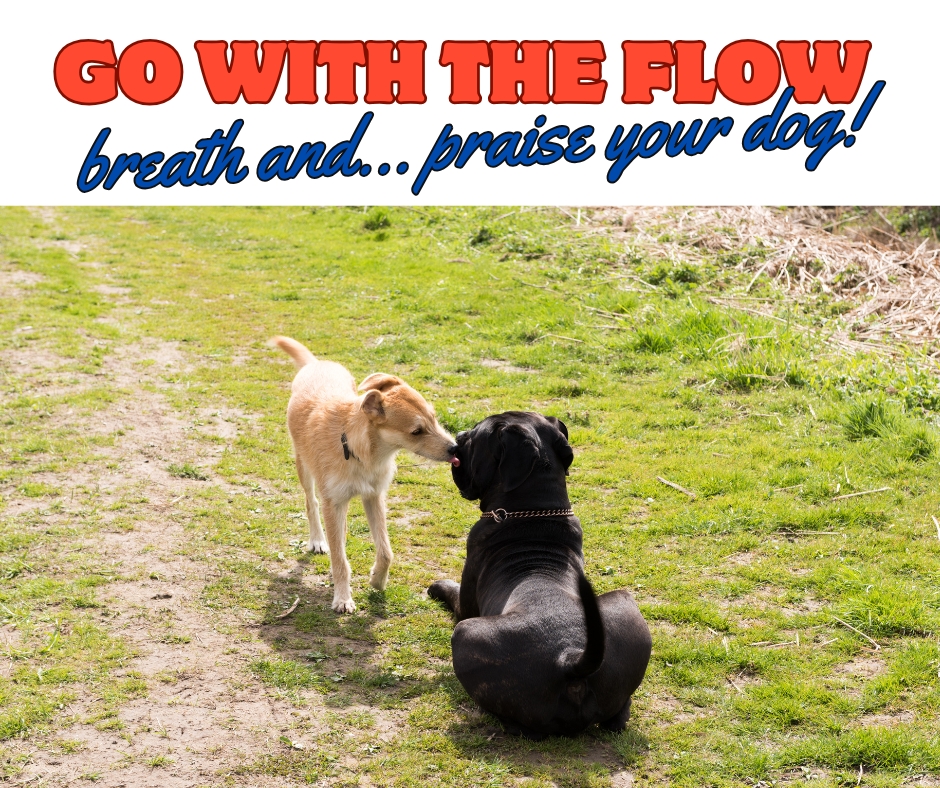
If a dog is approaching you at pace sometimes the best thing you can do is just go with the flow! Here are some ideas for helping doggie meet-and-greets go well:
- Get your dog on lead if you need it to stay in control. Otherwise, ask your dog to stay close by.
- Stay present and positive. Chances are the approaching dog is friendly, even if they are approaching at pace. If you assume the other dog is aggressive and respond with confrontation yourself, you can turn a perfectly normal (although unwanted) dog meet and greet into a stressful interaction.
- While the dog is approaching, use gentle “happy talk” and praise to help your dog and the oncoming dog stay relaxed. Stay positive (as opposed to warning your dog to “leave it”).
- Keep your eye on the other dog at all times but avoid direct eye contact that can be confrontational for dogs.
- Don’t approach the dog but if the dog approaches you keep praising and attempt to keep the pressure off your lead if you are using one (easier said than done). Stay calm, keep praising.
- Lots of dogs just want to come and have a quick sniff, check you out and then carry on.
- Maybe you were looking for a chance for your dog to make a new friend? And this is the perfect opportunity?!
- If the dog is being a pest, look for an owner. If the owner of the other dog is in sight, communicate calmly and ask them nicely to call their dog.
- Slowly move away with your dog and try to create distance. If the other dog follows you, keep moving at a slow pace to try to get away, reach the dog’s owner, or seek assistance.
Avoidance Strategies
Sometimes, the best strategy will be to attempt to avoid meeting the oncoming dog at all. If there is something about the approaching dog that is making you nervous OR you already know that your own dog will really not cope with the other dog (friendly or not) OR there is a big size difference between your dog and the approaching dog then… try to avoid the oncoming dog completely. Obviously, avoiding an oncoming dog is easier said than done, especially when the dog is fast approaching. However, the following strategies are worth a try:
Treat Scatter & Go!
Scatter treats on the ground to distract the approaching dog. Then attempt to make a getaway with your dog while the dog is distracted sniffing out treats. Don’t run, but move briskly away. Stinky special treats like sausage cubes would work best for distracting a dog like this. But ANY treats you are carrying could work. Be generous!
Note: I advise caution around introducing food between unfamiliar (or any!) dogs unless you know that you are in control of the situation. Be careful your actions do not aggravate the behaviour between the dogs due to competition for the food/treats.
Carry a Deterrent
Carry a low level deterrent to use to defend your dog, scare off another dog or break up a dog fight.
- A simple (water) pump bottle is a good solution and easy to carry. Lots of dogs really don’t like water spray and will run off if you squirt it at them. However, this approach can be a gamble because these days many dogs are not scared of water sprays. In fact they think they are an opportunity for a refreshing drink!
- A product called “Pet Corrector” is a more reliable deterrent. Pet corrector is a can of compressed air that makes a very loud “hissing” noise when you press the button on top. In my experience the loud “hissing” noise startles most dogs. Again, not all dogs will be scared by the sound, but many will be startled and want to get away from the scary noise. https://www.animates.co.nz/pet-corrector-200ml.html
- Remember, it’s highly unlikely another dog owner will be impressed if you attempt to spray their dog with anything at all. Even if their dog is being a nuisance. It will also likely give your own dog a big freight. So, my advice it to only use deterrents as a very last resort or if the owner of the other dog is not present to help you.
NOTE: It is against the law in NZ to carry a device that could be classed as a “disabling weapon” (like pepper spray or mace for example). Possessing these restricted weapons can result in arrest, even if you’re just carrying it for self protection.
Body blocks
You can also try ‘body blocking’ the approaching dog. This is where you stand between your dog and the approaching dog and use your body as a shield. This is obviously not for the feint-hearted. Giving the oncoming dog the cold shoulder by blocking access to your dog will be a deterrent for many dogs and they will loose interest. Keep your dog focused on you either with training or lead management.
If the approaching dog appears aggressive you are potentially dealing with a serious situation and getting in the way may result in you being injured. It’s a personal decision what action (if any) you take. Remember that any attempt by you to break up or get in the way of a fight may result in a bite or attack being “redirected” on to you, even by your own dog.
PICK UP LITTLE DOGS!
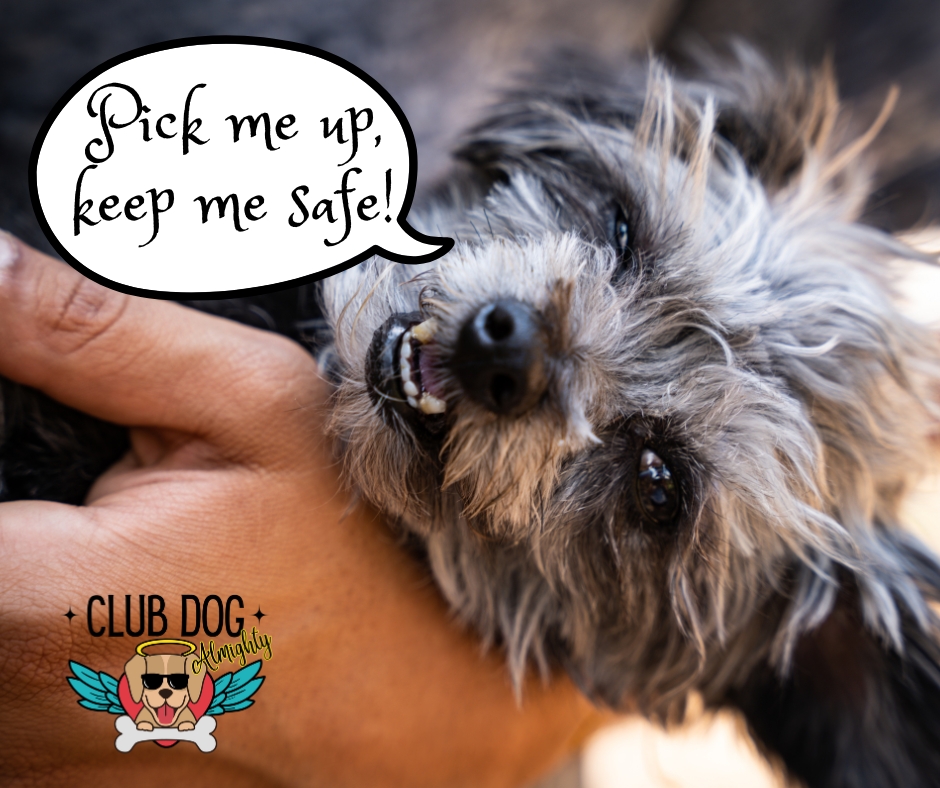
Yes you read that correctly!! In my experience, little dog owners get a lot of flack and criticism for picking up their little dogs. They are therefore reluctant to even admit that they do it. In my opinion, if an unknown big dog is approaching you, and you have cause for concern for whatever reason, picking up your little dog is one of the ONLY things you can do to protect them. When there is a big size difference between dogs things can happen very quickly so err on the side of caution.
Warning… picking your dog up might mean turning the heat on you instead. It is your personal decision if you chose to do this.
Do your own homework
To give yourself the best chance of showing up for your dog when they need you, you can do some planning, preparation and practice:
Educate yourself
Lots of people tell me they find it difficult to “read” dogs. It is not uncommon for people to be confused about how dogs are feeling and behaving. The good news is that dog body language and communication is a subject that can be studied and it is really not that complicated when you understand the basics. Work with a dog trainer or take a course to improve your basic knowledge about dogs if you need to. Knowledge is power.
Protect your hands
If your dog is being attacked or gets into a fight with a dog in public, avoid reaching in with your hands. Your fingers and hands are very vulnerable and no match for a dog’s powerful jaw. If you must get involved, try to find a stick or something else to use to try to break up the fight instead of your hands. I wear strong boots often while walking dogs because I would sooner use my boot to break up a fight than my hands. Although my preference would be neither and I would exhaust all other options available to me before getting any of my limbs involved. And even then, I might leave them to sort it out themselves. It depends on the situation.
Know your rights as a dog owner
It is each dog owner’s responsibility to control their dog(s) and stop them being a nuisance to others in public. Any dog owner or person in control of a dog in a public place can be prosecuted under the dog control act for failing to control their dog. They do not have the right to allow their dog to be a nuisance to you, even in an off lead area. If someone is repeatedly not controlling their dog, make a complaint about it.
Train your dog!
Teach your dog some training exercises and practice regularly. At least practice enough that your dog is responsive to you when you need it. Regular training allows you to control your dog much better, which in turn enables you to deal with emergency situations much better. Work with a dog trainer if your dog walks have become stressful due to your own dogs’ behaviour. Some simple strategies and the correct equipment can make a big difference to you enjoying your walks again.
Have the correct equipment
This will significantly improve your chances of staying in control.
- Always carry a lead even if you think you might not need one, it is the law after all!
- If your dog is big and strong, get a suitable anti-pull harness so you can stay in control (and on your feet!).
- If your dog might be a danger to another dog who approaches you in public, then train your dog to wear a muzzle and always have them wear it when out and about. There is a lot of unnecessary stigma around muzzles and the reality is that muzzles are just another training tool.
Final Thoughts
Hopefully you or someone you know might find the info in this blog helpful. Some parting thoughts…
- Have compassion. Most people don’t plan to lose control of their dog, but sh!t happens on dog walks. Try to have compassion for and be helpful towards anyone who is trying to get their dog back under control. It could be you next week!
- Be careful where you choose to walk to reduce the chances of unwanted dog intrusions. Know the rules that apply in your walking areas (on lead, controlled exercise or dogs prohibited). Choose places that you are comfortable walking, stick to the rules and report people who don’t.
- Actively complain to your local council when you’ve been subjected to an unwanted dog intrusion that upset you.
- Alert business owners/staff about known problem dogs or areas.
- Take photos of roaming dogs and report them. Not many dog intrusions actually result in a complaint to council. That doesn’t mean they are not happening, it means we are not reporting the incidents. Our general lack of reporting in turn makes it difficult for the council to take action.
If you have any suggestions about how to deal with off lead dogs, please feel free to leave a comment below. Ciao for now!