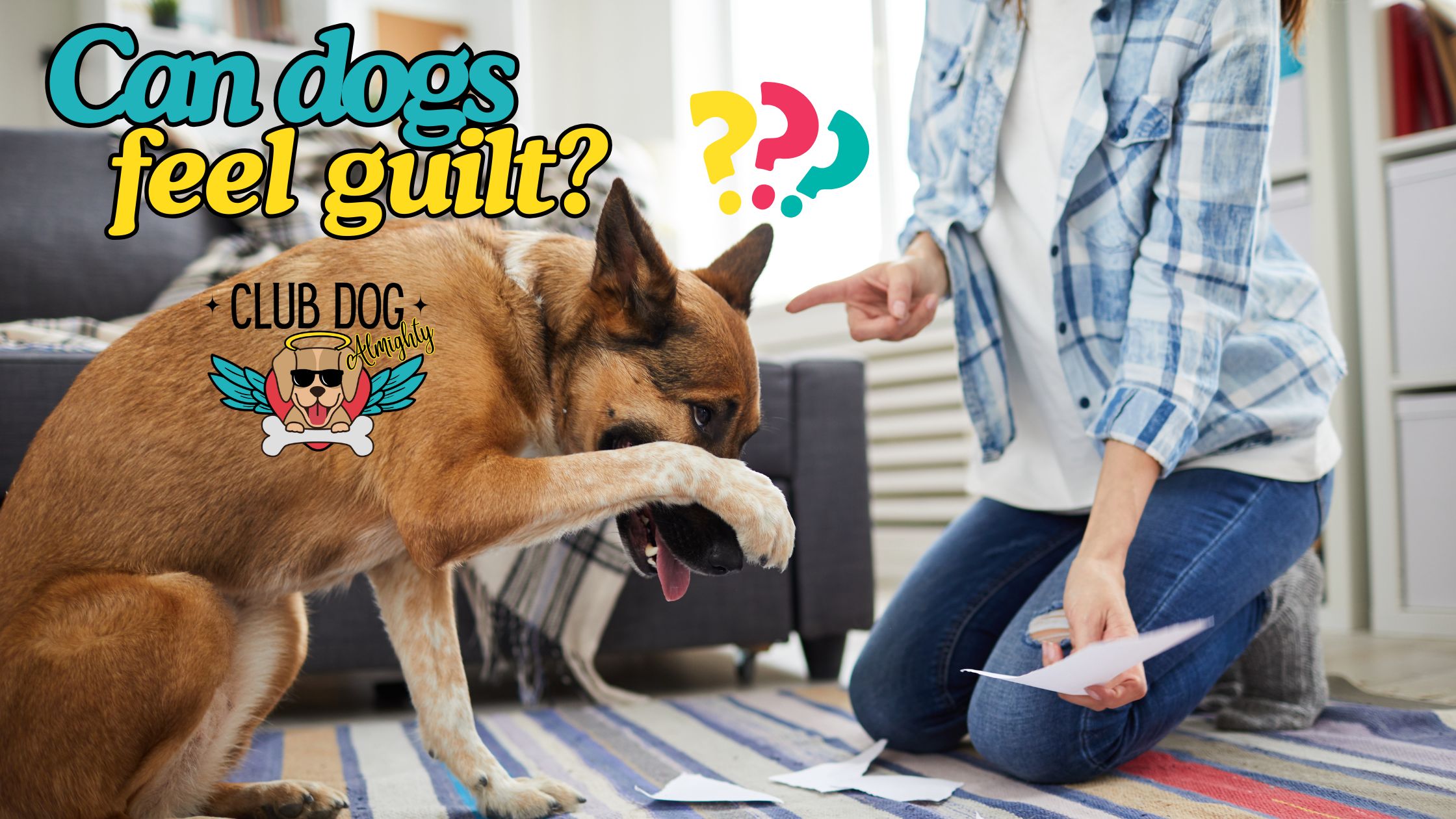
You’ve probably come across your dog after he’s done something ‘naughty’, like peeing in the house or chewing something up. His body language seems to radiate guilt. Dogs certainly can look as though they are feeling guilty. But is that what’s really going on for the dog?
Guilt or appeasement?
If you take a closer look, the same body language signals that we interpret as guilt (i.e. ears flattened, head lowered, tail between the legs) are also signs of fear or appeasement in dogs. Dogs know when their pet parents are unhappy with them, and they can learn to placate their humans by looking ‘sorry’.
So, can dogs feel guilt? Honestly, we are not sure! Let’s look at what we do know…
- Experts generally agree dogs have an extremely limited sense of time. Unless you catch your dog in the middle of the act, they won’t make the connection between their mistake and your correction.
- There’s little doubt that dogs are capable of feeling primary emotions such as happiness, sadness and fear. There’s less evidence that dogs experience secondary emotions like guilt and shame. Secondary emotions are much more complex, and dogs simply may not have the cognitive ability to process such complicated feelings.
- More recent studies indicate that dogs and other animals have mental cognition capabilities that we previously thought were “uniquely human.”
- Dogs recognise that you’re angry and will display submissive behaviour to appease you. These submissive behaviours, like a meek expression and a bowed head, look a lot like how humans display guilt.
The Science
A 2009 study observed dogs and their owners under several sets of circumstances and discovered that dogs tended to display “guilty” body language more frequently when their owners scolded them than when the owners remained neutral – regardless of whether the dogs had actually done anything wrong.
Dog cognition scientist Dr. Alexandra Horowitz concludes that a better description of the so-called “guilty” look is to call it a response to owner cues or demeanour. The guilty look is unlikely to be an appreciation of breaking a rule and feeling remorse. You can read more about Dr. Alexandra Horowitz’s research in her fascinating book called “Inside of a dog” first released in 2010 (https://alexandrahorowitz.net/).
Although down through the years we have been warned not to assign human qualities to our dogs, we cannot deny that the evidence of their complex abilities is mounting. The truth is, the mental territory we can claim to be “uniquely human” is shrinking at an alarming rate. It has now been discovered that wasps can distinguish faces, dolphins call one another by name, pigs use tools, zebra finches dream, parrots go on Zoom, and sometimes crayfish get anxious! With these more recent discoveries in animal cognition it seems a lot more plausible that a dog could in fact be capable of feeling a complex emotion like guilt.
A study earlier in 2024 at Eötvös Loránd University in Hungary, indicated that dogs can remember the names of their old toys, even when they hadn’t seen them for two years. This skill is called “language acquisition’ and we previously thought it to be a “uniquely human” thing. It turns out it might not be so unique to humans after all because the dogs in this recent study seemed to have the ability to store words in their memory.
The team involved in the study stress that just because some dogs can learn and retain object names long-term, not every dog can do so, with the factors behind the skill still unclear. However, it was noted dogs with the talent often had owners who spent a lot of time engaging with them. So, the more you invest in your dog, the more you will get back from the relationship.
(If you’re feeling nerdy you can read the full study here: https://royalsocietypublishing.org/doi/10.1098/rsbl.2024.0208)
Conclusions
The question of whether dogs experience guilt technically remains unanswered. Dogs certainly can look as though they are feeling guilty. However the so-called “guilty” body language signals are also signs of appeasement in dogs. It is also true that we are making new discoveries about animal cognition all the time. It is entirely possible that dogs do in fact experience guilt or similar but we just can’t prove it yet. That doesn’t mean it is not happening. We just can’t be sure 😉
Do you think your dog can feel guilt? Why?