jumping Up is a Common Challenge faced by Owners
Whether you’ve got a brand new puppy who thinks you’re a trampoline, or an older dog who still launches themselves at guests like a furry missile, jumping up is one of the most common challenges dog owners face. Puppies do it because they’re excited and curious; older dogs often do it because, well, it’s worked for years!
Here’s the truth: your dog isn’t being bold or bossy. They’re just thrilled to see you (or your visitor). Trouble is, muddy paw prints down your clean jeans or a small child being bowled over isn’t quite the welcome most of us are after.
The good news? No matter your dog’s age, you can turn those flying hugs into calm, polite greetings. It just takes practice, consistency and patience.
Ignore the Jumping
Yes, including that cutie pie face!
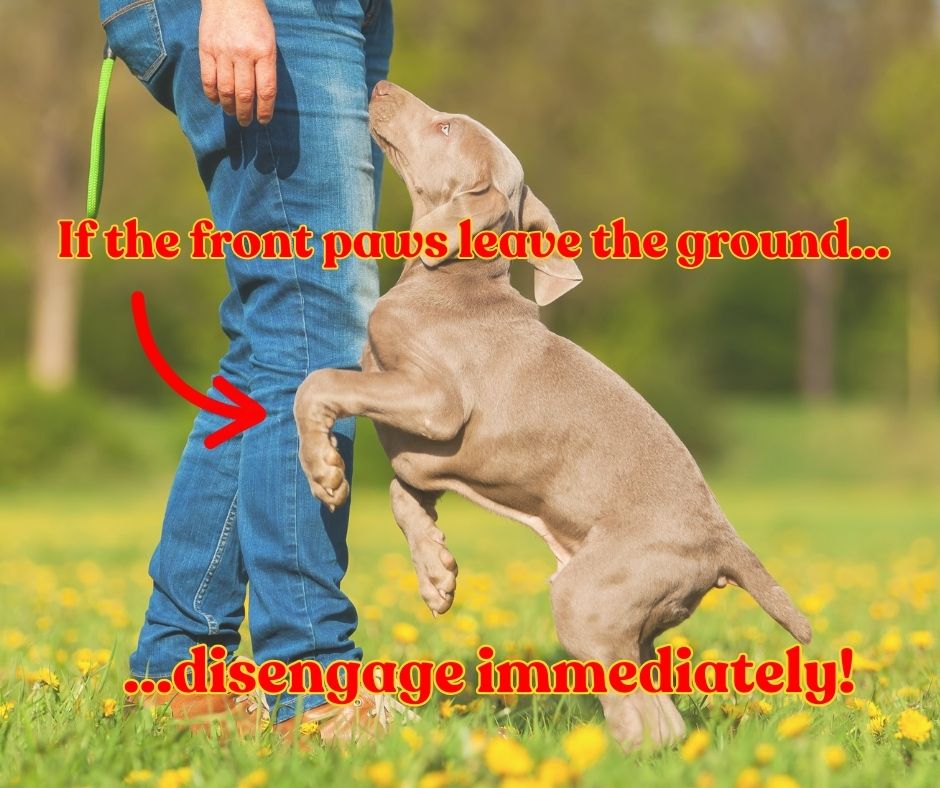
This one’s tough. Dogs jump because it gets your attention. When your dog leaps up, it’s tempting to push them down and say “off!” or laugh at their enthusiasm. But here’s the catch: any attention (positive or negative) teaches your dog that jumping works. Even a stern “No!” or pushing them off still counts as attention.
So, the trick is NO INTERACTION AT ALL if they jump or even if their front paws just leave the floor/ground.
What to do instead… channel your best poker face and:
- Turn your back when paws leave the floor.
- Fold your arms and look away.
- If they won’t stop, calmly step outside a door/baby gate. Return promptly once they’ve cooled their jets.
Think of it like this… jumping makes the humans disengage or vanish BUT four paws on the floor makes them stay and play.
Real life Example
Your lovely Labrador launches at you when you get home from work. You turn away and step back outside. Thirty seconds later, you return. This time she tries to figure out how to make you stay (because jumping makes you leave) so she pauses for a moment. You celebrate, stay with her and hand over a treat. Suddenly she’s thinking “Pausing for a moment gets me treats AND Mommy – BINGO!” OK so it might take more than once or twice to teach your dog this lesson but if you are consistent they will learn how to make you stay.
Sit Instead
Because Bums on the Ground Beat Paws in the Air
A dogs cannot sit down and jump up at the same time. Which makes “sit” your secret weapon for combating jumping up. Yes this takes practice, consistency and patience. Will it stick eventually? YES!
How to train it:
- As you approach your dog or your dog approaches you, cue them to sit.
- If they sit, reward them like they’ve just solved world peace!
- If they ignore you and jump anyways? Back to ignoring i.e. look away, turn away, move away.
- Stay patient, try again. Mistakes are part of your dog’s learning.
Real Life Example
You are trying to relax in the evening but your bouncy Boxer has other ideas and is jumping on you to get your attention. You might need to move yourself to somewhere your dog can’t ‘own you’ like by sitting on a higher stool, at a table and chair or simply standing. Next time your dog approaches, ask them to sit before they jump. Praise lots for correct responses, give your dog some micro attention before they feel they need to seek it from you. Teach your dog that sitting gets your attention. If your dog continues to be a pest then pop them in a crate or in the garden so you have some space. It is also important to make sure your dog is getting enough exercise and enrichment each day so they are not bored. Bored dogs seek attention for entertainment.
TOP TIP:
Use a lead, tether or barrier for beginners especially when you are having visitors around. It is tricky to simply ignore a dog that is in your lap or in your face and sitting will work for a time but a pup will soon get bored and attempt to jump again. Use your lead to manage boredom behaviour and encourage sitting instead.
Sit to Greet
Most of the chaos happens when guests arrive. Excitement is high, rules go out the window. That’s where practicing “sit (or down) to greet” comes in.
Practice this drill:
Pop your dog on a lead.
One person holds the lead; another approaches.
If your dog sits, they get love, praise, maybe even chicken.
If they jump, the greeter spins around and walks away.
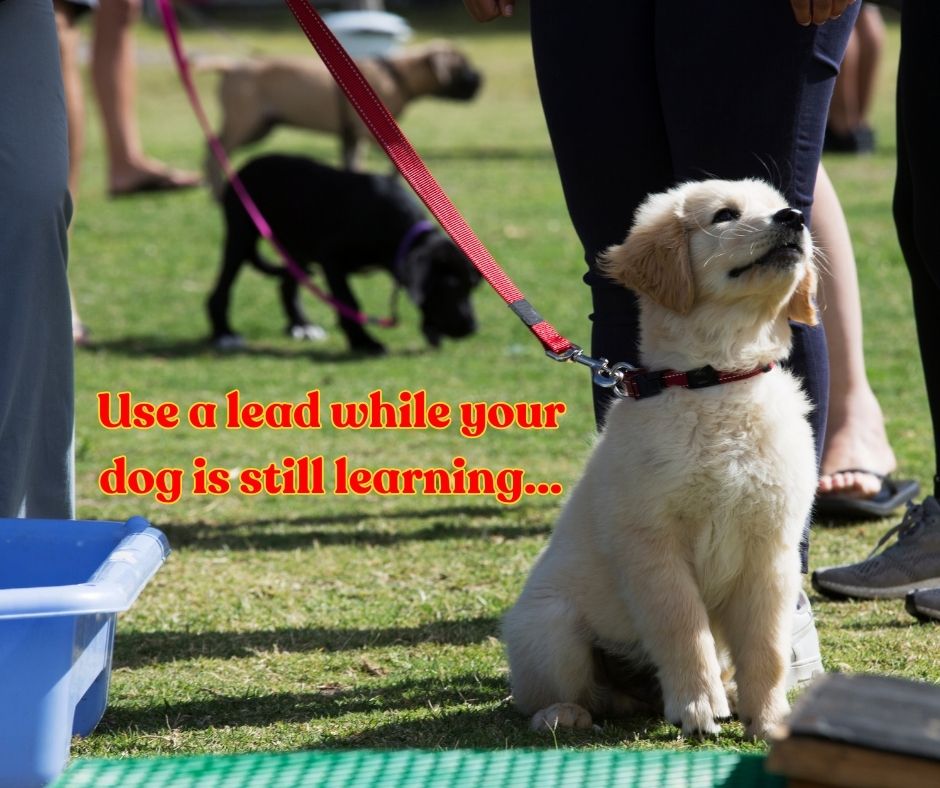
At first, you may need to prompt your dog to sit. The long-term goal? That your dog automatically plants their bum down whenever someone approaches, no cue needed.
Real Life Example
Using a lead and harness, tether your pup to something strong like the leg of a heavy sofa. Practice some sitting for treats to warm your dog up! A friend arrives for a visit and you ask for their help for a few moments to train your pup. Arm your friend with a treat and ask them to approach pup who is tethered. Pup jumps (naturally) so friend (coached by you) does a slick about-turn and walks off. Quick break. Next round, when your friend approaches, pup sits, wins the treat and gets smothered in praise. HURRAH! Lightbulb moment for pup = “Sitting keeps my new mates close to give me yummy treats. Jumping makes them vanish. Got it!” It might take a few repeats for your pup to have this lightbulb moment, but it will happen! Keep the faith and be consistent.
TOP TIP:
Sitting to greet doesn’t work for all dogs, especially if they are mega excited. You could ask them to play “find the treat” you throw on the floor a few times to help them get some energy and excitement out and then ask them to sit when they are calming down.
Consistency Is Everything
Sorry, No Free Passes
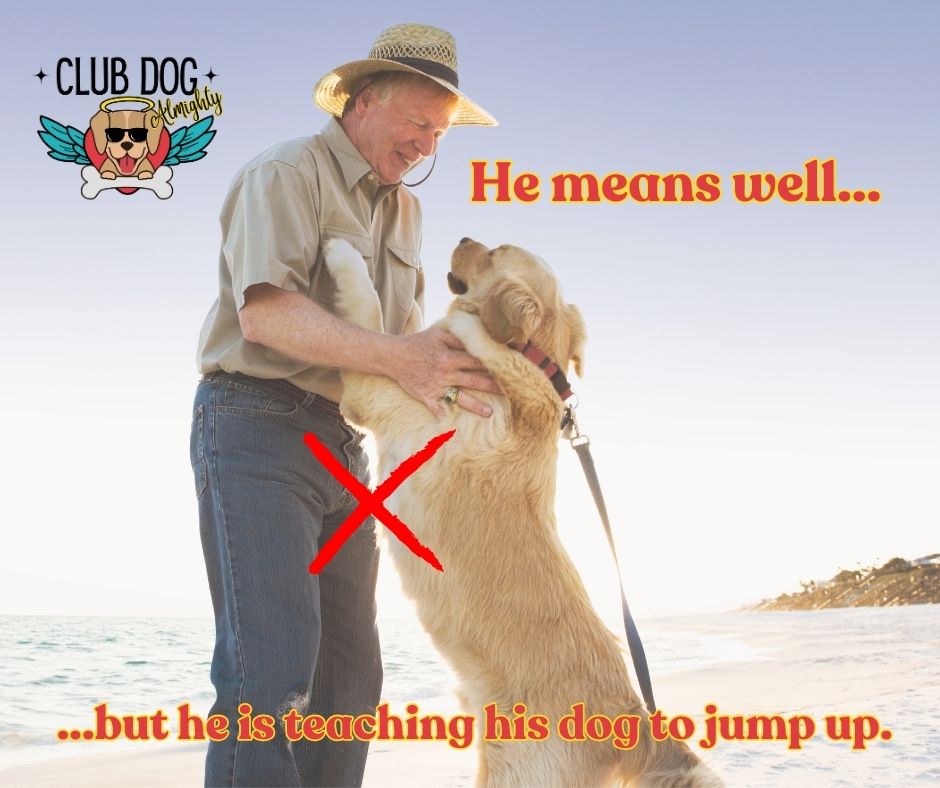
If half the family ignores jumping and the other half thinks “but he’s just so adorable,” you’re sunk. If anyone is allowing your dog to jump on them for whatever reason… hugs, dancing, affection… it is going to confuse your dog. Everyone must be on the same page.
Dogs thrive on clear rules. Everyone, including Grandma, the courier driver, and your kids’ mates, needs to play the same game.
Paws on the floor = jackpot.
Manage the Madness
While your dog is still learning, stack the odds in their favour. Think about sensible management strategies to help your dog get it right. You also need to make sure you (or your visitors) are not part of the problem…
Keep them on lead when guests arrive.
Use baby gates or a separate room until things calm down.
Stash treats by the door or in your letterbox so you’re never caught off guard.
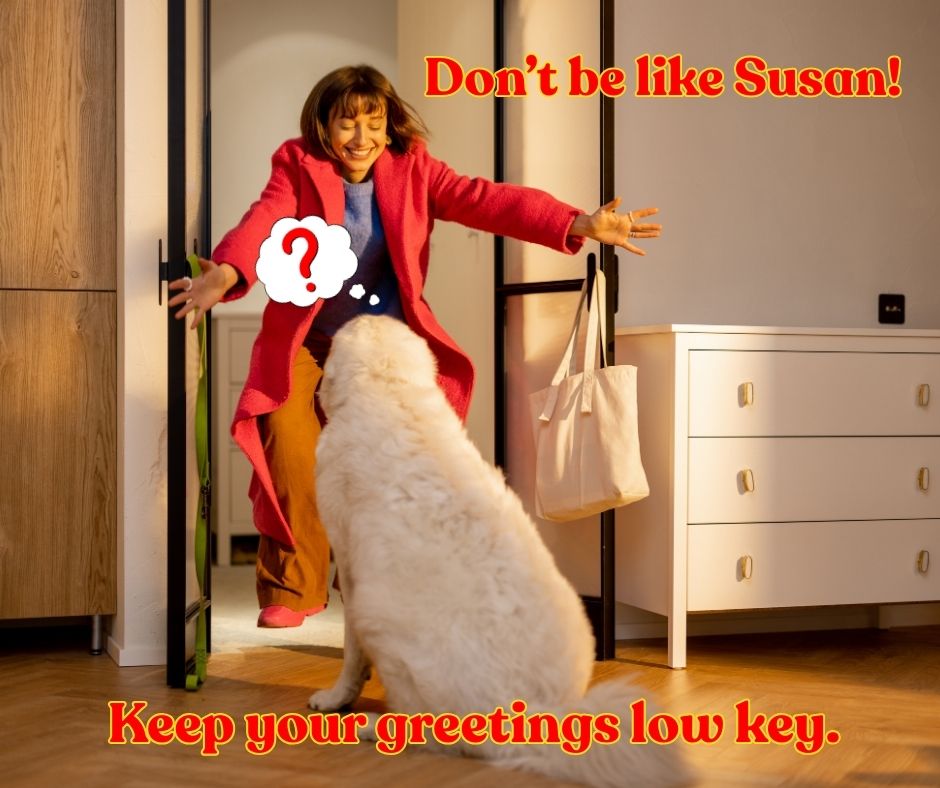
Keep your greetings low key so it is easier for your dog to respond to you in the same calmer way.
This isn’t about being harsh or bribing your dog – it’s about setting your dog up to succeed.
Practice Makes Polite
For puppies, the world is brand new and oh-so-exciting so they jump to express themselves. For older dogs, it is a habit that’s been rehearsed for years. Either way, change doesn’t happen overnight. But it does happen. Celebrate every small win… the sit that lasts two seconds, the first visitor greeted without paws on their chest. It’s all progress!
And keep your sense of humour. Your dog isn’t scheming ways to ruin your clean jeans. They just love you to bits. With time, consistency and a pocket full of puppy snacks, you’ll see that love expressed in calmer, kinder ways.
Case Study: Luna
Here is a video of me training with a dog called Luna. She is a very excitable jumpy dog and in this training session we are practicing her manners around a new visitor.
Final thoughts
From wriggly pups to seasoned jumpers, every dog can learn a better way to say hello. Ignore the leaps, reward the sits, and practice “sit to greet” until it’s second nature. Soon, you’ll have a dog who greets you with calm charm instead of flying paws.
And trust me… your thighs, your visitors and your laundry basket will all be eternally grateful.

REAL TRAINING. REAL LIFE. REAL DOGS.