When it comes to toilet training it is a smart move to be ready to hit the ground running from day one with your new pup. Get clear in your head about what your approach is going to be. Try to be set up properly with all the supplies you need before your puppy arrives.
Supplies
For successful toilet training you will need:
- Tasty treats!
- A puppy crate
- A puppy pen
- Puppy pads, newspaper or artificial grass
- Pet cleaner
Overview
Toilet training puppies has two important parts:
- Reward your puppy for eliminating (pee & poo!) outside.
- Interrupt mistakes inside & redirect outside.
In this article I take a look at both sides to this training plan as well as exploring the benefits of crates, your options for night time and gradually giving your pup more freedom as they learn the rules.
Your reaction is how they learn…
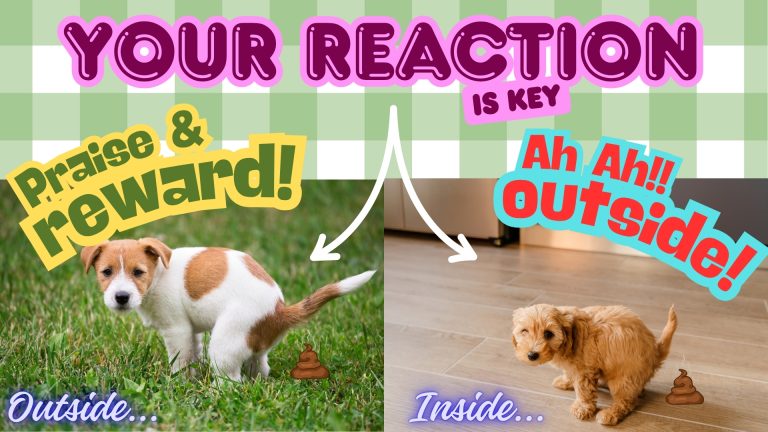
Your puppy is learning from you all the time. How you react each time they pee/poo is how they will learn where you want them to go.
Toilet Outside = Praise & Reward
Every time your puppy goes to the toilet outside praise, get excited, give food treats and have fun times. In other words, throw a pee party! Be generous, this is an important lesson. If you bring your pup outside frequently you will:
- Give your pup more chances to go while out there.
- Give you more chances to praise and reward him for getting it right.
Be careful not to start praising too early or you might distract your pup from finishing his business! Make sure you have treats in an easy access place (i.e. in your coat pocket or hidden in the garden somewhere?) so you have them when you need them.
Always go outside with your puppy rather than sending him out on his own. This way you know for sure if the deed is done AND you can be there to reward with praise and food treats as he finishes.
It can be a good idea to use a collar/harness and lead for toilet breaks, even if your garden is enclosed. Using a lead can help keep the puppy on task and prevent the puppy getting distracted by things in the garden before they have their toilet break. You should also use a lead if you want to teach your puppy to eliminate in a particular area in your garden.
Note: It is very important to praise and reward ALL outdoor successes for the first few weeks. Try to witness as many successes as possible so you can react to your puppy and teach them that it pleases you when they toilet outside and pays off for them.
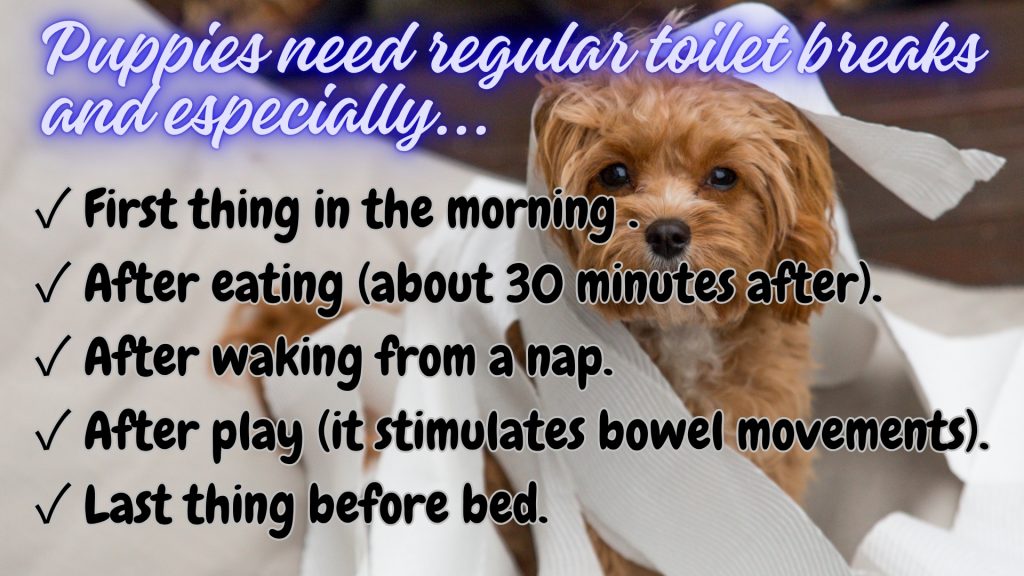
Young puppies (i.e. 8 -10 weeks) usually need to go out every hour. Gradually extend the time between toilet breaks as the puppy gets older and learns the rules.
Mistakes Inside = Interrupt & Redirect
Mistakes may happen and if they do it is important that they are dealt with appropriately to limit the impact on training. All mistakes indoors must be interrupted and redirected. Interrupt mistakes by saying AH! AH! and clapping your hands.
The timing of the interruption is important; the ideal time to interrupt mistakes is when the puppy is still looking for a place to go or is about to start. Interrupt with “ah ah” and then hustle the puppy outside immediately to finish. If he finishes outside, praise and reward as usual.
Remember the aim is to interrupt your puppy but not punish him. Your puppy should understand that you do NOT approve of them going to the toilet inside. However, rubbing the puppy’s nose in it or scolding him will not teach him anything except that eliminating around YOU is unsafe or dangerous. If you scare your puppy he may learn to wait until you are out of sight to eliminate or to hide it behind furniture etc.
a puppy crate
If your puppy makes a mistake while unsupervised and the mistake is discovered later, there is nothing that can be done at that point to discipline your puppy. Better luck next time! Put your puppy away for a few minutes while the accident is cleaned up properly. Try to have closer supervision so you can interrupt and redirect mistakes as they happen. Mistakes indoors that are missed by you as they happen really slow down the learning process for your pup.
Never punish or excessively scold the puppy for accidents that are discovered later. Because of the delay between the time the puppy went to the toilet and the time it was discovered the puppy will not make the connection between the accident and the punishment. Interruptions must happen while your puppy is in the act or about to do the act. If the puppy is having regular accidents then you need to have closer supervision and more frequent outings for chances to eliminate.
Clean all accidents thoroughly with an enzymatic cleanser e.g. Nature’s Miracle.
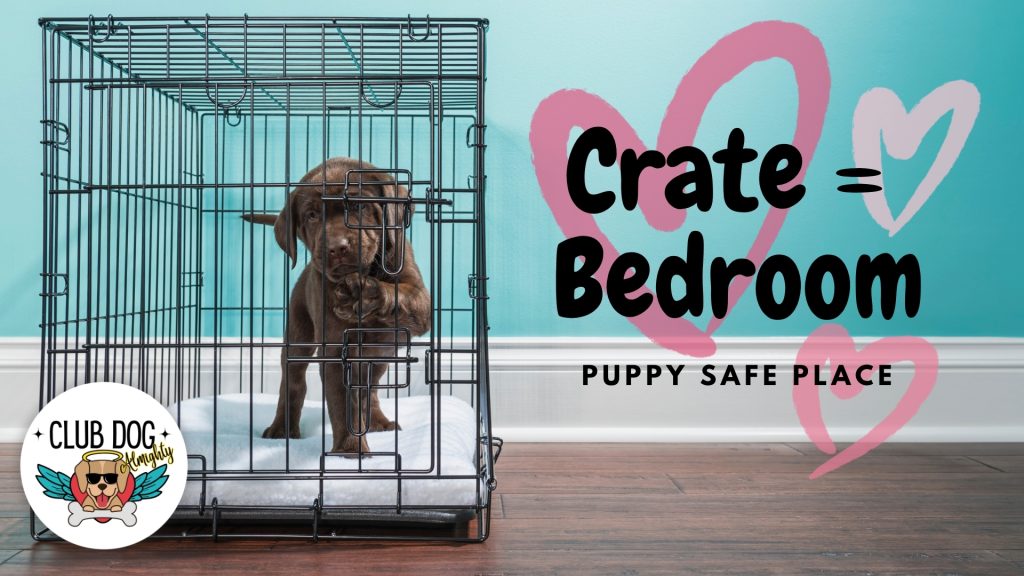
I’m a big fan of crates for dogs of all ages but especially for puppies. Once trained, most dogs learn to love their own crate like kids love their own bedroom. Crates can also be an important safe haven for sensitive puppies or busy households. A crate can be a very useful tool in toilet training your puppy because it helps to teach a puppy to control their bladder.
Instinctively puppies do not like to soil in the same area where they eat and sleep. So if your crate is set up correctly, your pup will learn to hold on to go to the toilet until you let them out of the crate (as long as you don’t leave them in there too long). Puppies that have been left in their crate for too long between toilet breaks can become stressed and be forced to soil in their crate.
A crate should be big enough for your puppy to stand up, lay down, stretch out and turn around. Make sure it is not so big that your puppy can eliminate at one end and then go to sleep at the other end.
Crate Training
If your pup is not used to spending time in a crate before they came to you, you might need to introduce the crate gradually. Make the crate very comfortable and give your pup lots of things to do inside the crate like chew toys and hidden treats etc. Make sure your pup is fully comfortable resting in the crate with the door open before you start to lock your pup inside for short periods.
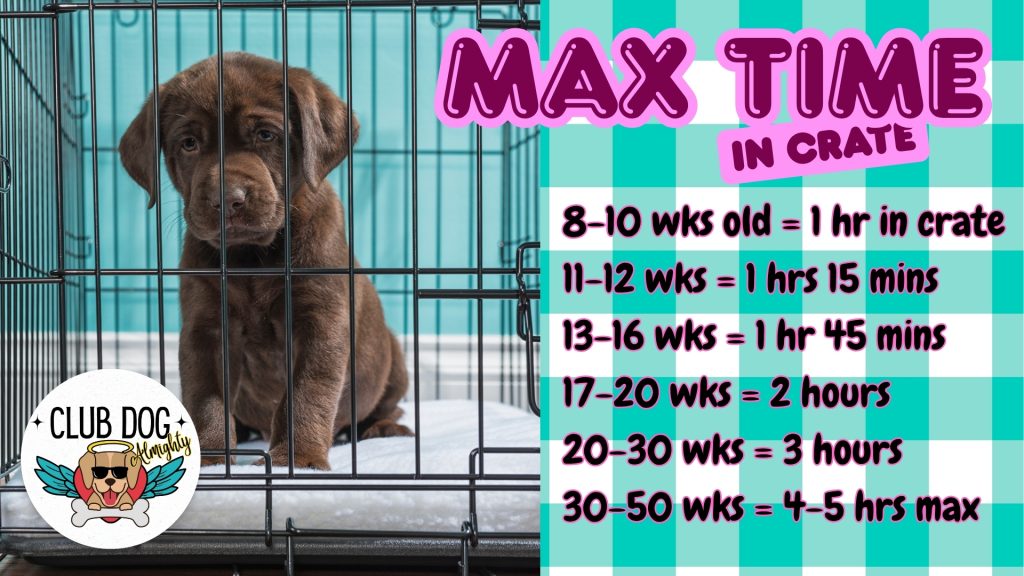
What's the maximum time your pup be in a crate?
Once a pup is starting to settle in a crate you can gradually build the time they spend in there. All puppies are different and times depend on age, size and breed. Puppies’ bladders are still growing so they need to relieve themselves more frequently than adult dogs. The New Zealand SPCA recommends that Puppies under six months should spend no more than 2-3 hours in a crate during the day without a toilet and play break.
Do not leave the puppy in the crate for too long as this will force him to soil it and any accidents in the crate must be avoided if possible. The following are very general guidelines for the maximum amount of time it is advisable to leave a puppy confined to a crate.
overnight
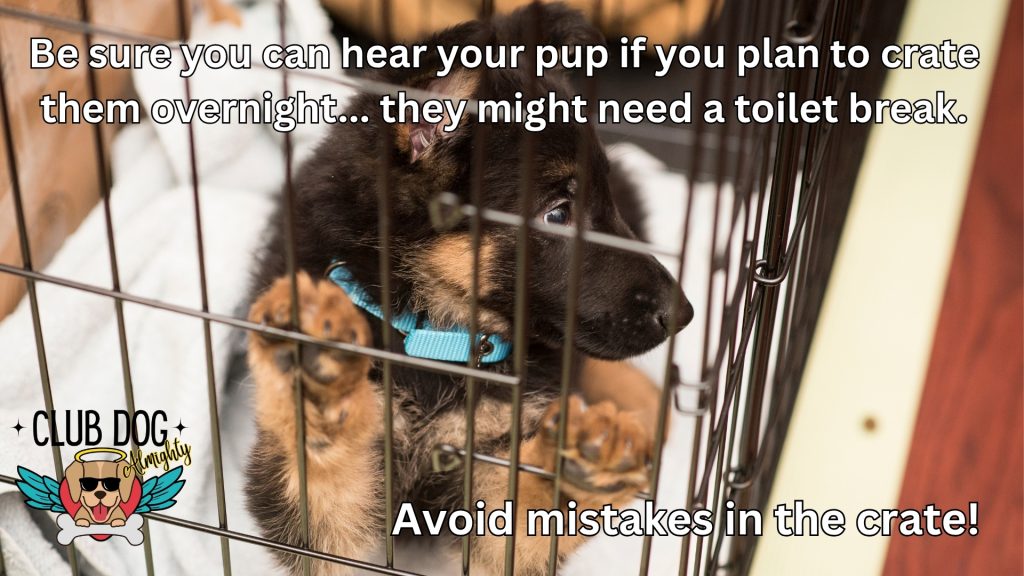
Puppies can stay in their crate for longer periods overnight. Some pups can make it through the whole night without a toilet break. If your puppy can make it through the night, lucky you! If your puppy cannot make it through the night without a toilet break that is ok too. If your puppy does need overnight toilet breaks, you have two options:
Option 1 - bring your pup out for toilet breaks
Keep your puppy in their crate and within earshot. When your puppy cries in the night, get up and bring them outside for a quick toilet break. Then pop them back in their crate and go back to bed. Some puppies may need 2 or more toilet breaks during the night. This option 1 is definitely the preferred approach for the fastest results in achieving reliable toilet training. As your pup matures he will stop needing overnight toilet breaks.
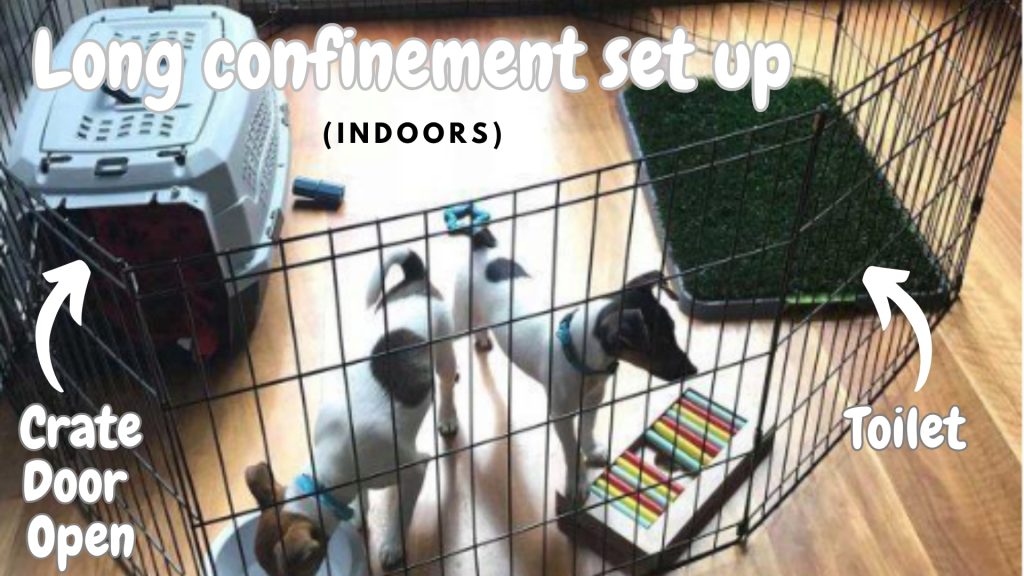
options 2 - Puppy Pen with indoor Toilet
Not every family or dog owner can get up to a puppy overnight so the puppy pen with toilet is a perfectly fine approach, it might just slow down progress a little with toilet training. This is because when pups are allowed to use puppy pads/newspaper overnight indoors, it can cause a little confusion for them in terms of establishing the inside/outside rules for going to the toilet. The impact will be minimised if you are diligent at all other times to prevent mistakes indoors and avoid leaving puppy pads etc down at any other time except for overnight or extended periods of your absence.
tethering your puppy
For the first few weeks some people like to tether their puppy to their waste with a lead whenever the puppy is indoors but out of their crate and pen. This can be a big commitment but if you are up for it, it will certainly help keep your puppy close to you so you can prevent mistakes. An error-free puppy training plan is the key to fast and long lasting results! If you are choosing to tether your puppy, make sure you get them a harness that fits them well to keep the pressure off their collar and vulnerable neck/trachea.
More freedom
If there have been no accidents for three to four weeks then gradually extend the area in which the puppy is allowed to play under supervision. Add one extra room of the house every week or so. Always closely supervise to interrupt and redirect any mistakes.
After about four or five months of age a puppy can be expected to hold on for longer periods. Gradually extend the duration between outings as your pup learns to hold on to go outside. If the puppy is having frequent accidents, go back to shorter periods for a couple weeks and gradually build up again.
Summary
Consistency, patience and close supervision is the key to successful puppy toilet training. Here are the most important points to remember:
Praise and reward your puppy for eliminating outside.
Take your puppy outside frequently to create opportunities to praise and reward.
Interrupt mistakes indoors (Ah Ah!) and redirect outside.
Correction must be immediate (catch them in the act!).
Closely supervise puppies indoors to prevent or catch mistakes.
Crates are a valuable tool for toilet training puppies but don’t leave the puppy in the crate too long.
Use a puppy pen with a toilet (puppy pads, newspaper or artificial grass) when confining for longer periods.
The key to successful toilet training is to closely supervise your pup in the early weeks and months when they are not in their crate or outside in the garden.